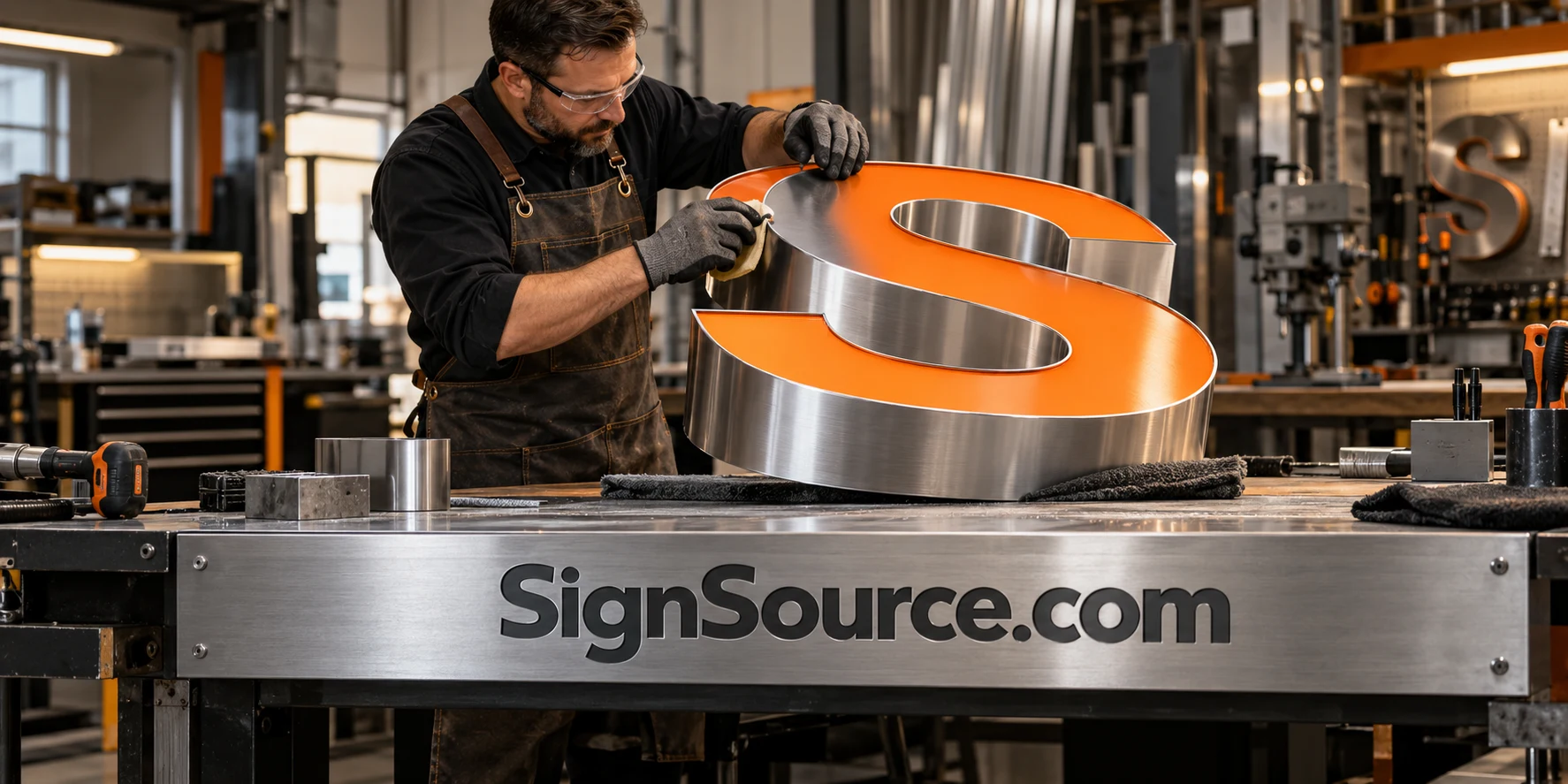
I would build SignSource.com as a fabrication brand for trade customers who care about what leaves the bench. The company could produce channel letters, logos, cabinets, and replacement faces for sign firms that manage the survey, sale, permit, and installation. Its public promise would be narrow: accurate fabrication, clear documentation, protective packing, and honest communication when a drawing or schedule needs attention.
The trade-production model already has visible examples. ESCO Manufacturing’s channel letters and logos present a defined fabrication category, while US Signs and Letters shows the range a wholesale producer can serve. I would begin with fewer configurations, document them fully, and widen the offer only when the shop can repeat the work at a consistent standard.
Quote from controlled inputs
The quote request should gather the details that change labor, material, freight, and risk. Letter height alone is not enough. The shop needs artwork quality, return depth, face material, trim choice, finish, illumination, raceway requirements, mounting pattern, access, destination, packaging needs, and requested date. Missing information should appear as an open decision, not hide inside a broad allowance that surprises both sides later.
A configured product page can teach buyers what the shop needs. A public example of face-lit channel-letter production gives useful context for common construction. Specific component pages, such as Jewelite trim cap information, show why finish, roll size, color, and compatibility belong in the job record rather than a casual note.
Make the handoff visible
I would give each accepted job a simple production record: approved artwork, dimensions, materials, colors, electrical components, patterns, photographs, pack count, and shipment reference. Changes would require a revised approval. A buyer should see whether the job is awaiting information, approved, in production, in quality review, packed, or handed to the carrier. Those states must reflect real shop events rather than optimistic dates generated by a storefront.
Quality checks would follow the product. Letter returns need seam and finish review. Faces need fit, trim, surface, and color checks. Illumination needs a documented test before packing. Patterns and hardware need verification against the record. Crates need photos before closure. A short checklist tied to each unit can protect the fabricator and give the purchasing sign company something concrete when a field question appears.
Capacity planning would be visible enough to protect the promised date. The shop can group work by process, track constrained equipment, and reserve time for quality review and packing. Rush work should have a defined acceptance rule rather than interrupting every approved job. If a date slips, the customer needs an early specific update with the affected stage and revised plan. Silence converts a production problem into a relationship problem.
A brand that stays behind the trade
The customer relationship should remain clear. If the company is serving other sign firms, its packaging, paperwork, and communication must respect that channel. Neutral shipping and configurable labels may matter. So does discretion around project photos. Permission should be explicit before client work becomes marketing material. A trade shop earns repeat orders by making its customer look prepared in front of the end client.
I would keep the visual identity rooted in shop material: ink, aluminum, white acrylic and production marks. A restrained accent color could make the brand recognizable across paperwork and packaging. The tone should feel like a signed job ticket with excellent typography. Product photography would show depth, seams, backs, wiring, faces, and packaging. Finished beauty shots have a place, but buyers also need to inspect what they will receive and install.
A town-based name can be familiar locally but restrictive when wholesale customers arrive from several states. SignSource.com sounds like the role of the fabricator rather than its street address. I would use that geographic freedom to build a carefully bounded service area around freight competence and lead-time control. Distance is worthwhile only when packing, carrier selection, tracking, and damage response are strong.
The shop would publish tolerances, artwork requirements, standard construction, change rules, and freight practices. That material may reduce low-quality quote requests, which is a benefit. Good customers appreciate knowing what is standard and what requires review. The sales team can spend its time resolving meaningful choices instead of repeatedly explaining basic file and finish requirements.
I would review a small sample of completed jobs every month with the production lead. We would compare quoted hours, material use, remake causes, packing photos, carrier damage, and customer questions. That record would guide specific corrections to estimating, drawings, checklists, and crate design before the same problem reached another order.
SignSource.com can give a capable fabricator a name with national room and trade credibility. I would judge the concept by repeat orders, low remake rates, reliable dates, and the number of jobs that install without an avoidable call. The word “source” should come to mean a production partner whose drawings, parts, packing, and communication arrive in agreement.