
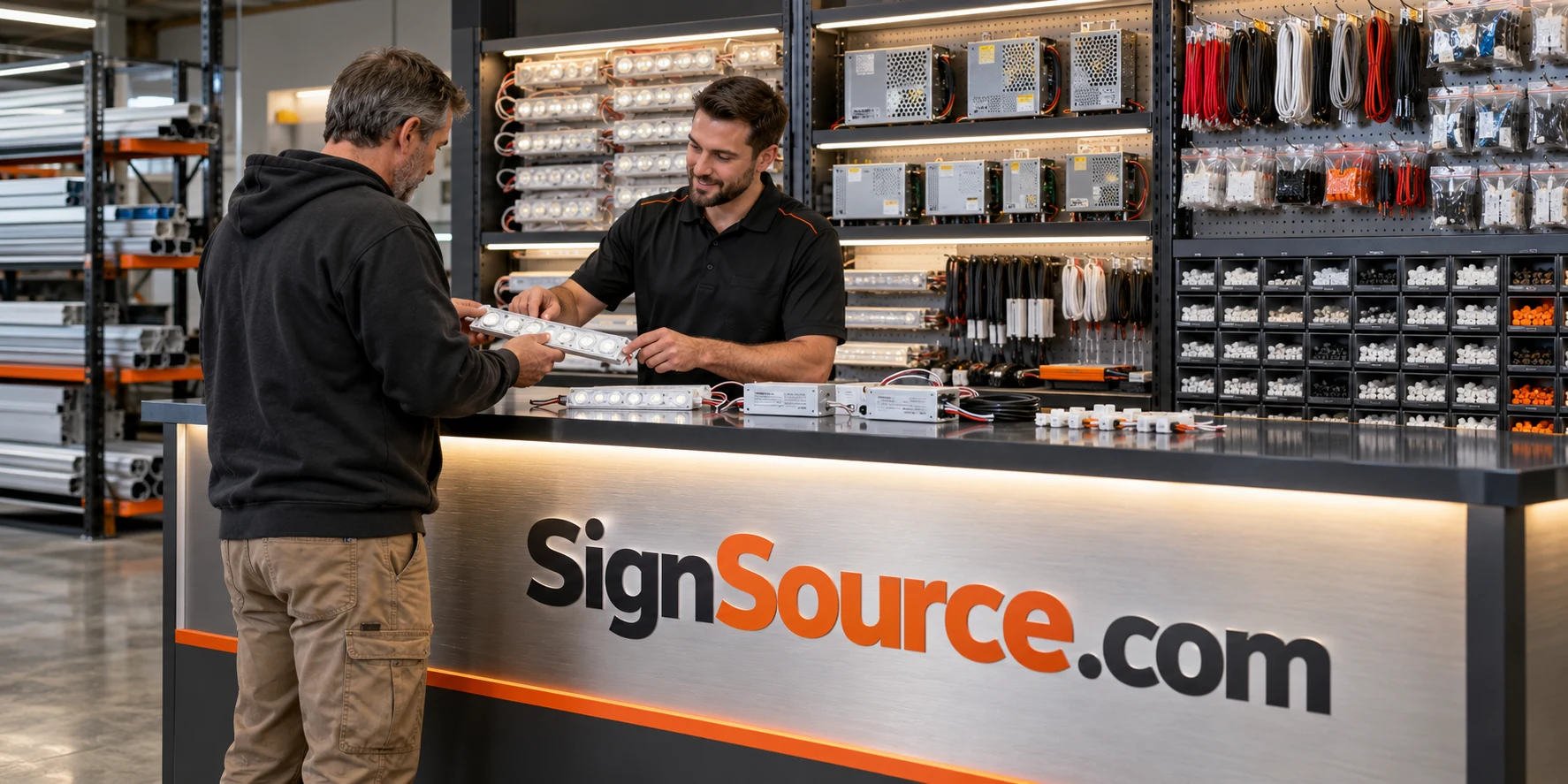
I would build this SignSource.com around the urgent, ordinary needs of sign installers and service technicians. The counter would carry the parts that keep a scheduled call from turning into a second trip: common modules, power supplies, sign tubes, sockets, wire, connectors, trim, fasteners, face material, aluminum blanks, and repair stock. The value would be fast identification and accurate pickup, not an endless marketplace.
Blanks make the model easy to understand. A listing from Central Sign Supplies identifies a specific white aluminum blank, while Blue Ridge Sign Supply’s variants show the choices around size and configuration. SignSource should let a caller describe the field need in familiar terms, then confirm alloy or finish, gauge, dimensions, corners, holes, quantity, and pickup time.
Design for the call from the truck
The mobile experience would start with large category choices and a strong search that understands trade language, old part numbers, and common descriptions. A technician may know the voltage and shape but not the current family name. Counter staff should be able to search the same aliases, ask a short diagnostic sequence, and send a product photo or dimension diagram before the truck changes direction.
Material records need enough precision to prevent substitution by appearance. Wieland Metal Services’ aluminum blank information gives one view of the product category, and Wrisco’s aluminum sign blanks give another. The counter should record coating, finish, thickness, temper when relevant, protective masking, hole pattern, and edge condition. A white rectangle is not a complete specification.
Reserve before the drive
I would make reservation a core feature. A customer can choose a location, confirm the quantity physically available, place a short hold, and receive a pickup code. Staff scans or records the items when placing them in the hold area. The system releases expired holds based on a stated rule. That small piece of discipline keeps “available” from meaning that another customer may already have it on a cart.
Pickup should be built around vehicles and job sites. Long stock needs a safe loading area. Fragile faces need protection and a clear inspection moment. Small electrical components need labeled bags tied to the order. A technician should leave with the invoice, product sheets, and any manufacturer instructions needed for review. The counter can be quick without becoming careless.
Local delivery could follow only after pickup discipline is stable. A scheduled route for bulky stock and planned replenishment may serve shops better than promising immediate delivery everywhere. Each stop needs scan confirmation, protected loading, and a named receiving point. Emergency courier options can remain separate and clearly priced in a private quote. The counter should never let the excitement of a wider radius weaken the accuracy of the shelf and hold area.
Knowledge belongs at the counter
I would hire for curiosity and train through real parts. Staff should recognize common cabinet lighting systems, module chains, supply loading limits, face materials, trim profiles, and blank gauges. They should also know when to stop and refer the customer to a manufacturer, licensed electrician, engineer, or code authority. The best counter answer sometimes begins with a condition that must be verified on site.
Resolved questions would become searchable notes after review. An obsolete component could point to a current replacement with documented differences. A sign tube listing could identify base type, length method, input configuration, and ballast-bypass instructions. A power supply page could include a loading worksheet that leaves manufacturer-required headroom. Each note should carry a date and source so old advice does not harden into folklore.
I would judge the search by the quality of the answer it helps staff reach. A fast wrong answer can send a technician to the wrong counter with the wrong part. Software can expose inventory and history, while staff verify the details that remain uncertain. A useful result should show the product record, supporting instructions and any condition that needs confirmation before a replacement is selected. That keeps speed tied to a sound decision.
Accounts could save vehicles, common pickup names, tax records, and frequently purchased parts. Service managers could create a list from the office while the technician drives toward the counter. Photos from the field could attach to the request. A clear confirmation would state what is reserved, what remains unverified, and when the hold ends. That is more useful than a generic order receipt.
SignSource.com fits the model because a field crew wants one remembered place to begin. I would open one excellent counter before imagining a network. If reservations are accurate, staff answers are grounded, and the common bins stay full, the address can earn a practical meaning. The goal is simple: help the right part reach the right cabinet before tonight’s access window closes.